Category: All

  • Commercial Shop Fit-Out for Homelux Lifestyle at Hazina Trade Centre, Nairobi CBD

    Commercial Shop Fit-Out for Homelux Lifestyle at Hazina Trade Centre, Nairobi CBD

    A well-designed commercial space begins with a clear vision, careful planning and quality execution. At Pawil Ventures Limited, we believe that every stage of construction contributes to creating a space that serves its intended purpose.

    Our project at Hazina Trade Centre in Nairobi CBD showcases the work involved in developing a commercial shop interior, from steel framework and partitioning to ceiling installation, decorative wall detailing and staircase elements.

    Through this project, we are documenting how an interior space takes shape through coordinated construction work, practical design decisions and attention to detail.

    Inside the Homelux Lifestyle Commercial Shop Fit-Out at Hazina Trade Centre

    Commercial spaces need to do more than look appealing. They must support the activities that will take place inside them, make effective use of available space and provide a practical environment for everyday operations.

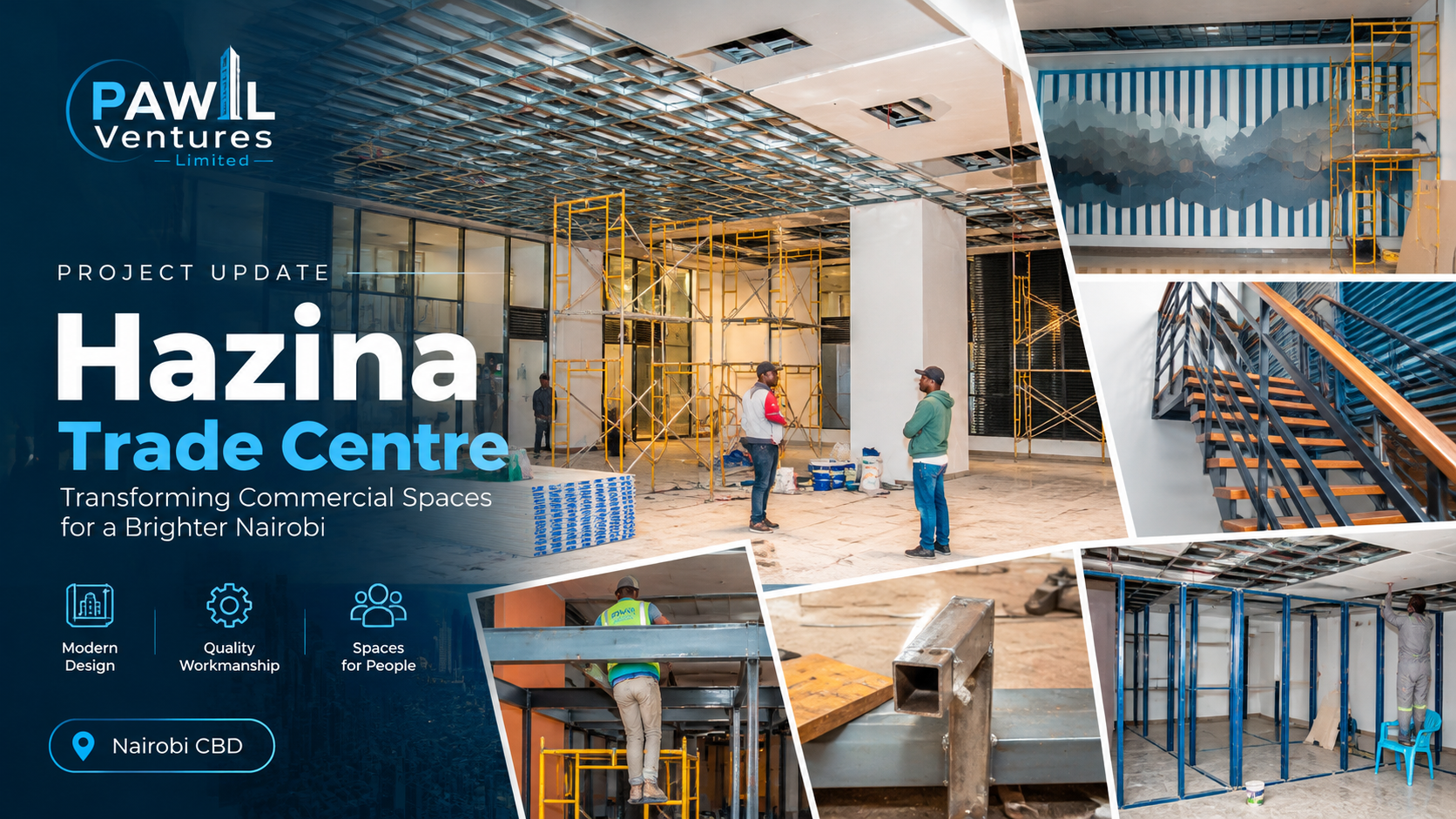
    At Hazina Trade Centre, the project involves developing our client’s shop space through a series of construction and interior fit-out activities. The photographs capture different stages of the work, showing the framework, partitions, ceiling systems and other interior elements being installed and refined.

    Each stage contributes to the development of a more defined commercial environment.

    1. Steel Framework and Interior Partitioning

    Steel framework and partitioning play an important role in shaping commercial interiors. They help define sections of a space and establish the framework needed for subsequent installation and finishing work.

    The photographs from the Homelux Lifestyle shop fit-out at Hazina Trade Centre show metal frameworks taking shape across the shop interior, alongside partition sections that help establish the layout.
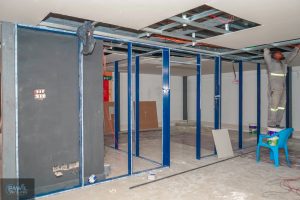
    Steel partition framework and ceiling panel installation inside the Hazina Trade Centre shop fit-out.

    Accurate measurements, appropriate positioning and coordinated installation are important considerations during this stage. Work completed here influences how subsequent elements fit together and how effectively the available space can be used.

    For businesses planning a shop fit-out in Nairobi, considering the layout early in the process helps ensure that the space is developed around its intended use.

    2. Ceiling Installation and Interior Finishing
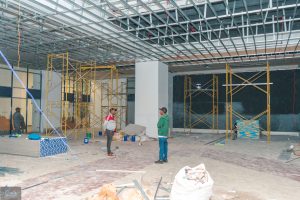
    Wide view of the Hazina Trade Centre commercial interior showing ceiling framework and construction scaffolding in Nairobi CBD.

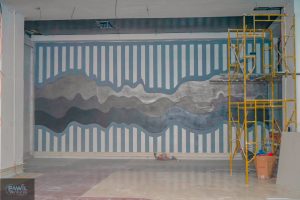
    Decorative feature wall with a patterned design inside the commercial interior at Hazina Trade Centre.

    Ceilings are an important part of commercial interior design. Beyond their appearance, ceiling systems can accommodate lighting and other building services, depending on the project’s design and technical requirements.

    Our project for Homelux Lifestyle at Hazina Trade Centre in Nairobi CBD showcases the work involved in developing a commercial shop interior, from steel framework and partitioning to ceiling installation, decorative wall detailing and staircase elements.

    This stage requires coordination between the framework, ceiling panels and other components within the space. Careful execution helps create a consistent finish and prepares the interior for subsequent detailing.

    For commercial construction and interior fit-out projects, the relationship between the ceiling, walls, lighting and overall layout should be considered throughout the process.

    3. Creating Visual Interest Through Interior Design

    A commercial interior should reflect the purpose of the business while making effective use of its available space.

    One of the photographs from the Homelux Lifestyle project at Hazina Trade Centre shows a decorative feature wall with a distinctive patterned design. Elements like this can contribute to the character of a commercial interior and help establish a recognisable visual identity.

    The choice of wall treatments, colours, finishes and other design elements should work with the wider interior rather than be considered in isolation.

    At Pawil Ventures, our work in construction and interior design brings these practical and visual considerations together as a project develops.

    4. Staircase and Metalwork Details
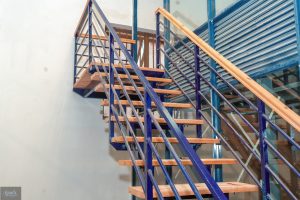
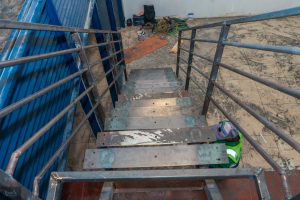
    Metal staircase with wooden treads and handrails inside a commercial interior fit-out project.View down a metal staircase showing unfinished steps during commercial interior construction.
    The project also includes staircase and metalwork elements, with photographs showing the staircase structure, treads, handrails and close-up fabrication details.

    These images highlight the importance of planning and measurement at the component level. Individual sections and connections must be prepared and fitted in coordination with the wider installation.

    Staircases and other circulation elements need to serve their practical purpose while fitting into the overall design of the space. Their installation should also follow the applicable safety and building requirements.

    It is these smaller details, alongside the larger structural and interior works, that contribute to the overall result of a commercial fit-out.

    5. Why Planning Matters in Commercial Shop Fit-Outs

    A successful shop fit-out starts with understanding how the space will be used. Before construction and finishing work begins, several considerations can help guide the project.

    Space planning: The layout should reflect the business’s activities, customer movement, storage needs and available floor area.

    Material selection: Materials and finishes should suit the intended application, expected use and maintenance requirements.

    Coordination: Framework, partitions, ceilings and finishes need to be planned so that different stages of work fit together.

    Attention to detail: Measurements, component positioning and finishing details can influence the appearance, usability and consistency of the final space.

    Function and appearance: A practical commercial interior should balance efficient use of space with a design that supports the client’s vision.

    Every project has different requirements. Clear communication between the client and the construction team helps align decisions with the intended use of the space.

    6. Construction and Interior Design by Pawil Ventures

    The Homelux Lifestyle project at Hazina Trade Centre illustrates the many activities involved in developing a commercial shop interior. From the framework and partitions to ceiling work, decorative features and staircase details, each stage contributes to the developing space.

    At Pawil Ventures Limited, we provide construction and interior design services for clients looking to develop or transform their spaces.

    Whether you are planning a shop construction project, a commercial interior fit-out or an interior design project, discussing your requirements early can help establish a clear direction for the work.

    We believe in approaching projects with attention to the client’s needs, the practical requirements of the space and the details involved in execution.

    Planning a Commercial Construction or Interior Design Project in Nairobi?

    Are you looking for a construction company in Nairobi to help with a shop fit-out, commercial renovation or interior design project?

    Pawil Ventures would be glad to discuss your requirements and understand your vision.

    Get in touch with Pawil Ventures Limited:

    Contact our team to discuss your next construction or interior design project.

    Pawil Ventures Limited — Let’s build your vision.

    Frequently Asked Questions

    What is a commercial shop fit-out?

    A commercial shop fit-out involves developing an interior space for its intended business use. Depending on the project, this can include partitions, ceiling systems, interior finishes, metalwork and other components required for the planned layout.

    What should I consider before fitting out a shop in Nairobi?

    Consider the intended business use, layout, customer movement, storage, materials, lighting, finishing requirements and project budget. Clear planning helps guide decisions throughout the fit-out process.

    Does Pawil Ventures offer construction and interior design services?

    Pawil Ventures Limited works in construction and interior design. Contact the team to discuss your project requirements and the services appropriate for your space.

    Where is the Hazina Trade Centre project located?

    TThe project featured in this article is the Homelux Lifestyle commercial shop fit-out at Hazina Trade Centre in Nairobi CBD. The photographs document selected stages of the construction and interior fit-out process.

  • Renovation vs Building New: Which is Better in Kenya?

    Renovation vs Building New: Which is Better in Kenya?

    Many homeowners in Kenya face the question: should I renovate my existing home or build a new one? Understanding the renovation vs building new in Kenya debate helps you make informed decisions about cost, time and long term value. In 2026, both options are popular, but each has unique advantages and challenges

    This guide breaks down the costs, benefits and considerations to help you choose the best approach for your home.

    Understanding Renovation

    Renovation involves improving or updating an existing structure. Common renovations in Kenya include:

    • Adding new rooms or floors
    • Upgrading finishes such as tiles, paint or flooring
    • Replacing roofs or windows
    • Modernizing plumbing and electrical systems

    Renovation is usually faster and less expensive than building new. It allows homeowners to retain the existing property while improving comfort and functionality.

    Advantages of Renovation

    • Lower overall cost compared to building a new home
    • Less time consuming than full construction
    • Ability to preserve sentimental or historical aspects of the house
    • Upgrades can increase property value

    Challenges of Renovation

    • Structural limitations of the existing building
    • Hidden problems like dampness, cracks or weak foundations
    • Sometimes renovation costs can exceed initial estimates

    Understanding Building New

    Building a new home involves starting from scratch. This option gives homeowners complete control over design, layout and materials. In Kenya, building new is preferred for expanding families, modern designs or when the existing structure is old or unsafe

    Advantages of Building New

    • Full control over design, layout and materials
    • Opportunity to use modern, energy-efficient, and durable materials
    • Minimal hidden issues compared to renovation
    • Potentially higher long term value

    Challenges of Building New

    • Higher cost compared to renovation
    • Longer construction timeline
    • Requires more approvals and permits from the county government
    • Need for professional supervision throughout construction

    Cost Comparison in Kenya (2026)

    Costs vary depending on location, design and materials. Approximate estimates are:

    • Renovation: KSh 10,000 – 30,000 per sqm depending on scope and finishes
    • Building New: KSh 30,000 – 70,000 per sqm depending on quality of materials and design complexity

    Renovation is cheaper for small upgrades but major structural changes can make it nearly as expensive as building new

    Factors to Consider Before Deciding

    • Structural integrity of the existing building
    • Long term goals for the property
    • Available budget and financing options
    • Timeframe for completion
    • Resale value and potential rental income

    Tips for a Successful Renovation or New Build

    • Hire experienced architects and structural engineers
    • Plan your budget carefully
  • Best Building Materials to Use in Kenya for Durable and Affordable Homes

    Best Building Materials to Use in Kenya for Durable and Affordable Homes

    Choosing the best building materials in Kenya is one of the most important steps when planning a construction project. The right materials ensure durability, safety and cost effectiveness. In 2026, understanding which materials are suitable for Kenya’s climate and construction standards is essential for building homes that last while staying within budget

    This guide highlights the most recommended building materials in Kenya for walls, roofing, flooring and finishes, helping homeowners and contractors make informed choices.

    Walls and Structural Materials

    For strong and durable walls, the most common materials in Kenya are:

    • Concrete blocks: Affordable, durable and widely available. Ideal for both urban and rural homes.
    • Bricks: Offer good insulation and strength but can be slightly more expensive than blocks.
    • Stone: Long lasting and ideal for foundations and feature walls. Transport costs may increase the overall budget
    • Cement and reinforced concrete: Used for structural columns, beams and slabs to provide stability and longevity.

    Roofing Materials

    Choosing the right roofing material in Kenya depends on durability, cost and design preference. Popular options include:

    • Mabati sheets: Cost effective, lightweight and easy to install. Suitable for most residential homes.
    • Cement tiles: Long lasting and resistant to harsh weather but slightly more expensive
    • Concrete slabs: Durable and strong, ideal for multi storey buildings
    • Iron sheets with insulation: Combines affordability with thermal comfort

    Flooring Materials

    Flooring contributes to both the aesthetics and durability of your home. Common materials in Kenya include:

    • Ceramic tiles: Durable, easy to clean and widely available in Kenya
    • Marble or granite: More expensive but offers long term durability and luxury finish
    • Vinyl or laminated flooring: Affordable options for certain interior spaces, with easy maintenance
    • Cement screed: Cost effective for simple flooring solutions in basic homes

    Finishing Materials

    Finishes enhance the look of your home and protect surfaces from wear and tear. Recommended options in Kenya include:

    • Paint: Choose weather resistant and locally available brands to reduce costs and maintenance
    • Tiles for bathrooms and kitchens: Waterproof and easy to clean, important for wet areas
    • Doors and windows: Use durable timber, aluminium or UPVC for longevity and low maintenance.
    • Sanitary fittings: Invest in quality sinks, toilets and taps to avoid frequent replacements

    Factors to Consider When Choosing Materials

    When selecting the best building materials in Kenya, consider:

    • Cost: Balance between quality and budget to avoid overspending
    • Durability: Materials should withstand Kenya’s varying climate conditions
    • Availability: Locally available materials reduce transportation costs and delays
    • Maintenance: Low maintenance materials save money over the long term
    • Safety: Ensure materials meet NCA and Kenyan building standards

    Tips for Affordable and Durable Construction

    • Buy materials in bulk to get discounts
    • Compare suppliers for quality and price
    • Hire skilled fundis to use materials efficiently
    • Plan your design to minimize wastage of materials
    • Use durable and climate appropriate materials to reduce long-term repairs

    Begin Your Project Today

    Choosing the best building materials in Kenya ensures your home is durable, safe and affordable. With proper planning, quality materials and professional guidance, you can build a property that stands the test of time

    Begin your project today:
    Contact Us

    For updates, photos, and project highlights, follow us on
    Facebook.

  • Common Construction Mistakes in Kenya and How to Avoid Them

    Common Construction Mistakes in Kenya and How to Avoid Them

    Understanding the common construction mistakes in Kenya can save homeowners and builders a lot of time, money and stress. Many projects face delays, budget overruns and poor quality outcomes because avoidable errors are made during planning, material selection, or construction. In 2026, knowing these mistakes and how to prevent them is essential for a successful building project

    This guide highlights the most frequent construction mistakes in Kenya and provides practical solutions to avoid them

    Mistake 1: Skipping Soil Testing

    Many homeowners fail to conduct a proper soil test before starting construction. Soil type determines the foundation requirements. Building on unstable soil without a soil test can lead to foundation cracks, uneven settling or structural damage. Always conduct a professional soil test as the first step in the construction process

    Mistake 2: Using Unqualified Fundis

    Hiring unskilled or unlicensed builders is a major reason projects fail. Inexperienced fundis can make errors in measurements, mixing ratios and construction techniques. Always hire experienced, licensed and reputable contractors to ensure quality workmanship

    Mistake 3: Poor Planning and Budgeting

    Many construction projects in Kenya suffer because of inadequate planning. Failing to budget for materials, labour, approvals and contingencies leads to delays and extra costs. Prepare a detailed project plan and budget before breaking ground, including a contingency fund for unexpected expenses.

    Mistake 4: Ignoring County Approvals

    Skipping building plan approvals and permits from county authorities is a common mistake. Construction without proper approvals may result in fines, project stoppages, or even demolition. Ensure all designs are approved by the county government and all statutory requirements are met

    Mistake 5: Choosing Cheap or Substandard Materials

    Trying to cut costs by using low quality materials often backfires. Cement, steel, roofing sheets and finishing materials must meet Kenyan construction standards. Substandard materials lead to cracks, leaks and costly repairs. Invest in quality materials to protect your investment

    Mistake 6: Poor Supervision During Construction

    Lack of regular site supervision is another frequent problem. Projects without consistent oversight are prone to mistakes, material wastage, and delays. Hire a qualified project manager or supervise the site regularly to ensure the building is constructed according to approved plans and specifications

    Mistake 7: Frequent Design Changes

    Changing designs repeatedly during construction increases costs and extends timelines. Every modification requires new calculations, adjustments and sometimes additional materials. Finalize your design before starting construction and stick to it as much as possible

    Mistake 8: Ignoring Maintenance and Durability

    Focusing only on aesthetics without considering durability is a common mistake. Choosing finishes or construction techniques that are not suited for Kenya’s climate may result in early wear and tear. Select materials and designs suitable for local weather conditions and long term use

    How to Avoid These Common Construction Mistakes

    • Conduct a professional soil test before starting construction
    • Hire qualified, licensed and experienced fundis and engineers
    • Plan your project thoroughly and prepare a realistic budget
    • Obtain all necessary county approvals and permits
    • Use high quality and locally suitable materials
    • Maintain regular supervision during construction
    • Finalize designs before breaking ground
    • Consider durability and maintenance in material selection

    Begin Your Project Today

    By understanding and avoiding the common construction mistakes in Kenya, you can complete your building project on time, within budget, and to high quality standards. Proper planning, professional guidance and attention to detail are key to a successful construction process.

    Begin your project today:
    Contact Us

    For updates, photos, and project highlights, follow us on
    Facebook.

  • Step by Step Building Process in Kenya: From Planning to Completion

    Step by Step Building Process in Kenya: From Planning to Completion

    Understanding the building process in Kenya is crucial for anyone planning to construct a home or commercial property. Many homeowners face delays, budget overruns and poor workmanship because they are not familiar with the proper steps involved in construction. In 2026, following a structured building process in Kenya ensures your project is completed on time, within budget and to high standards

    This guide takes you through the entire building process in Kenya, from planning and approvals to finishing and handover.

    Step 1: Land Verification and Survey

    Before starting any construction, verify the land ownership and boundaries. Conduct a professional land survey to confirm the exact plot size and location. This is an essential step in the building process in Kenya, as disputes over land or incorrect measurements can lead to legal and financial problems later

    Step 2: Architectural and Structural Design

    The next step involves hiring an architect and structural engineer to create detailed building plans. These include:

    • Architectural drawings for floor plans, elevations and interior layouts
    • Structural designs for foundations, columns, slabs and roofing
    • Bill of quantities and material specifications

    Accurate designs help minimize wastage of materials and ensure the construction follows Kenyan building standards

    Step 3: County Approvals and Permits

    Obtaining county government approvals is a mandatory step in the building process in Kenya. Required permits include:

    • Building plan approval from the county government
    • NCA registration for contractors
    • Environmental and safety clearances (if applicable)

    Skipping approvals can result in fines, halted construction or even demolition.

    Step 4: Site Preparation and Foundation

    Site preparation involves clearing the land, leveling and setting up temporary facilities for workers. The foundation is the most critical part of the building process in Kenya. The type of soil determines whether a standard or reinforced foundation is required. Conducting a soil test is essential to ensure the foundation is strong enough to support the structure

    Step 5: Superstructure Construction

    The superstructure includes walls, columns, beams, slabs, and staircases. During this stage, careful attention to workmanship ensures structural integrity. Regular supervision and quality checks are essential to maintain the standards set in your building plans

    Step 6: Roofing

    Roofing options in Kenya vary depending on budget and design preferences. Common options include mabati sheets, tiles and concrete slabs. The roofing stage should be completed carefully to prevent future leaks and water damage

    Step 7: Doors, Windows and Plumbing

    Install windows, doors and plumbing systems according to your approved plans. Ensure all materials are high quality and professionally fitted. Proper installation at this stage avoids expensive repairs later

    Step 8: Finishes

    Finishing works include plastering, painting, tiling, electrical fittings and interior finishes. This stage significantly affects the final look and feel of your property. Selecting durable and locally available materials helps maintain budget and quality

    Step 9: Inspection and Handover

    After construction is complete, conduct a thorough inspection to verify that all work meets the approved plans and quality standards. Once satisfied, the property can be handed over to the owner. This marks the completion of the building process in Kenya

    Tips to Ensure a Smooth Building Process in Kenya

    • Hire experienced architects, engineers and fundis
    • Plan your budget carefully before breaking ground
    • Buy materials in bulk or negotiate with suppliers
    • Maintain regular site supervision to avoid mistakes
    • Keep a contingency fund for unexpected costs

    Begin Your Project Today

    Following a structured building process in Kenya ensures your project runs smoothly, stays within budget and meets high quality standards. With professional guidance and proper planning, you can complete your construction confidently

    Begin your project today:
    Contact Us

    For updates, photos, and project highlights, follow us on
    Facebook.

  • Cost of Building a House in Kenya: A Complete 2026 Guide

    Cost of Building a House in Kenya: A Complete 2026 Guide

    The cost of building a house in Kenya is one of the most important considerations for anyone planning a construction project. If you are building a family home, rental units or a commercial property, understanding construction costs helps you make informed decisions. In 2026, the cost of building a house in Kenya continues to be influenced by rising material prices, labour availability, location and county regulations

    This guide provides a detailed breakdown of the cost of building a house in Kenya, the factors that affect pricing and practical tips to help you manage your construction budget effectively

    Average Cost of Building a House in Kenya in 2026

    In 2026, the average cost of building a house in Kenya ranges between KSh 30,000 and KSh 70,000 per square metre. The final cost depends on the type of house, level of finishes, location and overall project complexity

    • Low-cost or basic finishes: KSh 30,000 – 40,000 per sqm
    • Mid-range finishes: KSh 40,000 – 55,000 per sqm
    • High-end finishes: KSh 55,000 – 70,000+ per sqm

    For instance, a standard 3-bedroom bungalow measuring approximately 120 square metres may cost:

    • Basic finishes: KSh 3.6M – 4.8M
    • Mid-range finishes: KSh 4.8M – 6.6M
    • High-end finishes: KSh 6.6M and above

    These estimates exclude the cost of land, boundary walls, landscaping and external works

    Main Factors That Affect the Cost of Building a House in Kenya

    1. Location of the Project

    Location is a major determinant of the cost of building a house in Kenya. Construction costs in Nairobi, Kiambu, Machakos, Kajiado and other fast growing urban areas are generally higher due to increased demand for skilled labour and building materials. In rural areas, labour may be cheaper, but transportation costs for materials can increase the total budget

    2. House Design and Size

    The design and size of a house have a direct impact on construction costs. Simple designs with regular shapes are cheaper to build than complex structures with multiple balconies, curves or large open spans. Bungalows are generally more affordable than maisonettes because they require less structural reinforcement

    Proper architectural planning ensures efficient use of space and materials, reducing unnecessary costs.

    3. Cost of Building Materials in Kenya

    Building materials account for approximately 50 to 60 percent of the total construction cost. Prices of cement, steel reinforcement, building stones, roofing materials and finishes fluctuate depending on market conditions

    Finishing materials such as tiles, paint, sanitary fittings, doors and lighting can significantly increase the cost of building a house in Kenya if not carefully selected and budgeted for

    4. Labour Costs and Supervision

    Labour costs vary depending on skill level, location and project duration. Hiring experienced fundis and supervisors may cost more initially, but it improves workmanship and reduces rework, delays and long term repair costs

    Good supervision ensures materials are used efficiently and construction standards are maintained

    5. Soil Type and Foundation Requirements

    The soil condition of your land plays a critical role in determining foundation costs. Stable soil requires standard foundations, while black cotton soil or loose ground demands deeper excavation and additional reinforcement

    Conducting a soil test before construction begins helps prevent structural failures and unexpected expenses

    Typical Cost Breakdown of Building a House in Kenya

    Understanding how construction costs are distributed helps you plan and control spending effectively

    • Foundation and substructure: 10–15%
    • Superstructure (walls, columns, slabs): 25–30%
    • Roofing works: 10–15%
    • Doors and windows: 8–12%
    • Finishes (tiles, paint, fittings): 20–30%
    • Professional fees and approvals: 5–10%

    County Approvals and Professional Fees

    When estimating the cost of building a house in Kenya, it is important to include professional fees and statutory approvals. These include architectural and structural drawings, county government approvals, NCA registration and site supervision fees

    Failure to obtain the required approvals may result in fines, construction delays or demolition of the structure

    How to Reduce the Cost of Building a House in Kenya

    • Select a simple and functional house design
    • Plan your budget thoroughly before starting construction
    • Buy materials in bulk to benefit from discounts
    • Avoid frequent design changes during construction
    • Work with qualified and experienced construction professionals

    Attempting to cut corners often leads to higher repair and maintenance costs in the long run.

    Begin Your Project Today

    Understanding the cost of building a house in Kenya allows you to plan your project with confidence. With proper budgeting, professional guidance and quality workmanship, you can build a durable and valuable property

    Begin your project today:
    Contact Us

    For updates, photos, and project highlights, follow us on
    Facebook.

  • Construction Regulations in Kenya: The Ultimate Guide to Permits, NCA & Compliance

    Construction Regulations in Kenya: The Ultimate Guide to Permits, NCA & Compliance

    Construction regulations in Kenya are rules and standards set to ensure buildings are safe, legal and properly planned. Whether you are a contractor, developer or property owner, understanding these regulations is very important before starting any construction project

    Many construction projects in Kenya face delays, fines or even demolition because the owners did not follow the required permits and compliance procedures. This guide explains construction regulations in Kenya in simple English to help you build legally and avoid costly mistakes

    Overview of Construction Regulations in Kenya

    Construction regulations in Kenya exist to protect public safety, ensure structural stability and promote quality construction. These rules apply to residential, commercial and infrastructure projects

    Failure to comply with construction regulations may result in stop orders, fines, legal action or demolition of the building

    Role of the National Construction Authority (NCA)

    What is the NCA?

    The National Construction Authority (NCA) is the main body that regulates the construction industry in Kenya. Its role is to ensure contractors are qualified and that construction projects meet required standards

    NCA Registration Requirements in Kenya

    NCA registration is mandatory for contractors and construction projects in Kenya. Key requirements include:

    • Business registration documents
    • Tax compliance certificate
    • Qualified technical staff
    • Project registration details

    Working without NCA registration is illegal and may attract penalties

    Construction Permits Required in Kenya

    County Government Building Permits

    Before starting construction, you must obtain approval from the county government where the project is located. This process usually involves:

    • Submitting approved architectural and structural drawings
    • Providing land ownership documents
    • Paying the required permit fees

    Although procedures may differ slightly from one county to another, building approval is always required

    Environmental Impact Assessment (EIA)

    Some construction projects require an Environmental Impact Assessment before construction begins. This mainly applies to large or commercial projects and developments near sensitive areas

    The purpose of the EIA is to ensure the project does not negatively affect the environment or surrounding communities

    Building Codes and Standards in Kenya

    Building codes in Kenya guide how structures should be designed and constructed. These standards cover:

    • Structural strength and stability
    • Fire safety requirements
    • Ventilation and lighting
    • Accessibility
    • Use of approved construction materials

    Following building codes ensures buildings are safe and long lasting

    Health and Safety Regulations on Construction Sites

    Mandatory Safety Measures

    Construction sites must meet health and safety standards to protect workers and the public. These include:

    • Use of protective gear such as helmets and boots
    • Proper site fencing and warning signage
    • Safe handling of equipment and materials

    Responsibilities of Contractors and Employers

    Contractors are responsible for training workers, providing safety equipment and ensuring a safe working environment. Ignoring safety regulations can lead to serious accidents and legal consequences

    Common Construction Compliance Mistakes in Kenya

    Some common mistakes that lead to non compliance include:

    • Starting construction without permits
    • Hiring unregistered contractors
    • Ignoring inspections
    • Poor documentation
    • Failing to follow safety requirements

    Construction Compliance Checklist in Kenya

    Before starting any construction project, ensure you have the following:

    • Land ownership documents
    • Approved building plans
    • County government permits
    • NCA contractor registration
    • NCA project registration
    • Safety compliance measures
    • Scheduled inspections

    Penalties for Non Compliance in Kenya

    Failure to follow construction regulations in Kenya can result in fines, project shutdowns, demolition orders or legal action. It is always cheaper and safer to comply from the beginning

    Why Work With a Compliant Construction Company

    Professional construction companies understand permit processes, NCA requirements, safety regulations and quality standards. Working with experienced professionals helps ensure your project is completed legally and on time.

    Frequently Asked Questions

    Do I need NCA approval for residential construction?
    Yes. Most construction projects in Kenya require NCA registration

    Can I start construction before getting permits?
    No. Construction without approval is illegal in Kenya

    Who inspects construction projects?
    County government officials and regulatory authorities carry out inspections

    Final Thoughts

    Construction regulations in Kenya are designed to protect lives, property and investments. Following the correct procedures helps you avoid delays, fines and legal problems.

    Always ensure your project complies with NCA requirements, county permits, safety laws and building standards before construction begins

    Begin your project today:
    Contact Us

    For updates, photos and project highlights, follow us on
    Facebook

  • Top Construction trends in Kenya 2025

    Top Construction trends in Kenya 2025

    Kenya’s construction sector is changing fast in 2025. New materials, smart tools and green building ideas are shaping how we design and build homes, offices and factories. This post looks at the top trends every homeowner, developer and contractor should know. It explains each trend in simple terms and shows why it matters for Kenya

    1. Prefabrication and modular construction

    Prefabrication (or modular building) means making parts of a building in a factory and then assembling them on site. Construction trends in Kenya 2025 show this reduces time and cuts waste. For housing projects and school buildings, prefab units are faster to install and can be cheaper than traditional construction. This helps meet demand for affordable housing in growing towns

    2. Green and sustainable building

    Green construction focuses on saving energy and using sustainable materials. Construction trends in Kenya 2025 include solar ready designs, water saving systems and local materials like stabilized earth blocks. Using green methods lowers running costs and makes buildings healthier for occupants. Developers are also finding that green buildings attract buyers and renters who care about costs and the environment

    3. Digital tools: BIM, drones, and project apps

    Digital tools are improving planning, monitoring and coordination on sites. Building Information Modeling (BIM) lets engineers and architects create 3D models and spot problems early. Drones can survey sites quickly and at low cost. Project management apps help teams share updates and track progress. These tools reduce errors and save time and money on projects across Kenya.

    4. Durable and local materials

    Using durable local materials helps build strong structures while supporting local supply chains. Construction trends in Kenya 2025 show increasing use of locally made cement blocks, treated timber and improved concrete mixes. Choosing the right materials also helps buildings withstand Kenya’s varied climate and reduces long term maintenance

    5. Water management and waterproofing

    Water damage is a common problem in many buildings. New waterproofing methods and better drainage systems are now part of modern construction practices. Construction trends in Kenya 2025 emphasise protecting foundations, roofs and wet areas like bathrooms. Good water management limits repair costs and extends building life

    6. Energy efficiency and solar integration

    Solar power is becoming more common in Kenyan buildings. Roof mounted solar panels, energy efficient lighting and better insulation reduce electricity bills and increase resilience during outages. Construction trends in Kenya 2025 highlight designing buildings that are ready for solar and use less energy overall

    7. Skilled labour and safety improvements

    As projects become more technical, demand for skilled labour grows. Training programs, on site safety protocols and better supervision are crucial. Construction trends in Kenya 2025 push for safer sites with proper PPE, clear signage and routine safety checks to reduce accidents and improve quality

    8. Affordable housing and finance models

    Meeting the housing gap requires new finance models and partnerships. Developers, government agencies and private investors are exploring mortgage plans, microfinance and public private partnerships to fund projects. Construction trends Kenya 2025 encourage creative funding to make homes affordable for middle and low income families

    9. Resilient and adaptive design

    Climate change means buildings must be resilient. Designs now consider flooding, heat and changing weather patterns. Construction trends in Kenya 2025 focus on adaptive features like raised foundations in flood prone areas, natural ventilation for cooling and landscaping that reduces erosion

    10. Local regulation and standards

    Stronger regulation and adherence to building codes improve safety and quality. Contractors now pay more attention to permits, compliance checks and professional certifications. Construction trends in Kenya 2025 show that working with qualified engineers and registered contractors reduces risks and disputes

    Why these trends matter for Kenya

    Construction trends in Kenya 2025 matter because Kenya is growing. Cities expand and demand for homes, schools and offices rises. These trends help build faster, save money and improve quality

    How to apply these trends

    Construction trends in Kenya 2025 work for both small and large projects. Start with a clear plan, a realistic budget and the right team. Use digital tools to find problems early. For homes, consider modular parts; for larger projects, add green features and plan for solar. Always check contractor references and permits

    Quick tips

    • Construction trends Kenya 2025: plan your budget first
    • Choose contractors with safety records and digital tools
    • Prefer local materials to cut transport costs
    • Add energy saving features early
    • Check permits before work starts

    Conclusion

    Construction trends in Kenya 2025 are practical and necessary. They respond to urban growth, budget limits and climate change. Adopting modular methods, green building, digital tools and better safety improves outcomes for developers and occupants. If you plan construction, use these trends as a checklist and work with experienced local professionals to protect your investment and finish on time.

    Ready to start? Talk to a contractor who knows these construction trends and can guide your project from plan to handover.

    Begin your project today:
    Contact Us

    For updates, photos and project highlights, follow us on
    Facebook

  • Civil Engineering in Kenya Done Right – Precision, Quality & Durability

    Civil Engineering in Kenya Done Right – Precision, Quality & Durability

    Civil Engineering in Kenya plays a vital role in shaping the country’s infrastructure, improving connectivity and supporting sustainable development. From modern roads and bridges to efficient drainage systems and reliable water networks, the need for well planned and professionally executed engineering solutions has never been greater. At Pawil Ventures Limited, we take pride in offering top tier civil engineering services that combine innovation, precision and long-lasting performance. Our mission is to deliver infrastructure that meets today’s needs while supporting future growth.

    Why Civil Engineering in Kenya Matters

    Kenya continues to expand rapidly, with more people, businesses and industries depending on reliable physical infrastructure. Civil Engineering in Kenya ensures that essential systems are designed and built to support economic activity, enhance mobility and promote public safety. Whether it’s the construction of new roads, improvement of drainage channels, or installation of water supply lines, quality engineering impacts communities directly.

    By working with a professional civil engineering company, clients and developers can:

    • Ensure strong, durable and safe infrastructure
    • Improve transportation, connectivity and mobility
    • Prevent flooding and manage stormwater efficiently
    • Access clean water through properly designed supply networks
    • Reduce long term maintenance and repair costs
    • Achieve compliance with engineering standards and regulations

    What to Expect From Professional Civil Engineering in Kenya

    Every successful infrastructure project requires careful planning, accurate design and disciplined execution. At Pawil Ventures Limited, we  follow a structured end to end approach that ensures every stage of your civil engineering project is handled with expertise and attention to detail.

    Below are the core areas of our Civil Engineering services:

    • Feasibility Studies: Evaluating project needs, environmental impacts, site conditions, and cost estimates before construction begins
    • Design & Planning: Creating detailed designs for roads, bridges, drainage systems, culverts and water networks using industry best practices
    • Construction Supervision: Overseeing day to day construction activities to ensure accuracy, quality and safety
    • Project Management: Coordinating contractors, materials, and timelines to deliver efficient and cost effective results
    • Quality Control: Ensuring all materials, workmanship and processes meet engineering standards and regulatory requirements
    • Environmental Protection: Implementing sustainable practices that reduce environmental impact and promote long term resilience

    Whether the project involves building new infrastructure or upgrading existing systems, our engineering team ensures every detail is executed with precision and professionalism.

    Why Clients Trust Pawil Ventures Limited for Civil Engineering in Kenya

    Civil engineering projects require technical expertise, dependable supervision and a deep understanding of local conditions. At Pawil Ventures Limited, we have built a reputation for delivering reliable, high performance infrastructure solutions that serve communities for generations

    Our clients benefit from:

    • Experienced Engineers & Technicians: A skilled team with years of experience in road construction, drainage design, water networks and structural works
    • Advanced Technology: Modern design tools, surveying equipment and construction methods that enhance accuracy and efficiency
    • Strict Quality Assurance: Every project undergoes thorough inspections to guarantee strength, safety and durability
    • Cost Effective Solutions: Optimized designs and efficient supervision ensure projects stay within budget without compromising quality
    • Transparent Communication: Clients receive regular updates, professional documentation and clear reporting throughout the project.

    From highways and rural roads to stormwater drainage and water supply systems, our commitment remains the same: delivering high quality engineering solutions that meet functional requirements and exceed expectations

    The Value of Civil Engineering in Kenya

    Quality civil engineering is essential for national growth. Well designed infrastructure reduces travel time, supports trade, prevents flooding  and enhances the quality of life. At Pawil Ventures Limited, we focus on creating structures that offer long term performance, minimal maintenance and superior safety standards.

    Our approach ensures:

    • Efficient traffic flow and better access to urban and rural areas
    • Reliable water delivery and improved sanitation
    • Reduced environmental damage through sustainable engineering
    • Stronger, more resilient communities

    Every project we deliver is built with the future in mind. Through innovative engineering and disciplined execution, we help build infrastructure that supports social, economic and environmental development.

    Final Thoughts

    Civil Engineering in Kenya is an investment that directly influences development and quality of life. With the right team, infrastructure becomes safer, stronger and more efficient. Pawil Ventures Limited is committed to delivering engineering solutions that stand the test of time and serve communities for years to come.

    Start Your Civil Engineering Project with Us

    Whether you’re planning a new road, upgrading drainage or installing a water supply system, Pawil Ventures Limited is ready to guide you from planning to completion.

    Begin your project today:
    Contact Us

    For updates, photos, and project highlights, follow us on
    Facebook

  • Construction management in Kenya

    Construction management in Kenya

    Construction management in Kenya has become one of the most essential services for anyone planning a renovation, new build or commercial development. Managing a construction project requires coordination, planning, supervision and strict control and without the right expertise, costs rise and timelines stretch unnecessarily

    At Pawil Ventures Limited, we provide reliable, professional and efficient construction management services across Kenya. From the first concept to the final handover, our focus is to deliver projects that are timely, cost effective and built to the highest standards

    Why Construction Management in Kenya Matters

    With growing demand for modern buildings, efficient spaces and quality workmanship, construction management has become more important than ever. Whether it’s a residential project, commercial building or industrial development, proper management ensures the entire process runs smoothly

    By working with a skilled construction management team in Kenya, clients can:

    • Save time through organized planning and scheduling
    • Reduce unnecessary construction costs
    • Ensure quality control at every stage
    • Improve coordination between contractors, suppliers and consultants
    • Identify risks early and prevent costly challenges
    • Achieve predictable, professional, and durable results

    What to Expect During Construction Management in Kenya

    A successful construction project requires more than workers and materials it needs expert supervision and strategic guidance. Whether you’re renovating a single room or developing a multi-storey project, a clear and structured process makes all the difference

    At Pawil Ventures Limited, we follow tested systems that ensure every part of the project is controlled, coordinated and executed with precision. Below are the key focus areas in our construction management approach:

    • Project Planning: Defining timelines, budgets and goals to guide the entire construction process
    • Resource Coordination: Managing suppliers, contractors and on site teams to ensure smooth workflows
    • Cost Management: Monitoring expenses, preventing wastage and protecting your budget
    • Quality Assurance: Checking workmanship, materials and designs to maintain top tier standards
    • Risk Management: Identifying potential challenges early and solving them before they escalate

    Every project has unique demands some focus on efficiency, others on quality or creativity. Regardless of your goals, proper construction management ensures every detail is handled professionally

    Why Homeowners and Developers Trust Pawil Ventures Limited

    When it comes to construction management in Kenya, experience and accountability matter. Over the years, Pawil Ventures Limited has worked with clients across Nairobi and other regions, providing clear oversight and dependable support from start to finish

    Here’s what clients can expect when working with us:

    • Skilled Construction Managers: Our team applies industry best practices and technical expertise to guide every step of your project
    • Transparent Reporting: We provide regular updates and full visibility into progress, timelines and costs
    • Efficient Coordination: Contractors, suppliers, consultants and stakeholders work seamlessly under our supervision
    • On Time, On Budget Delivery: We prevent delays and manage costs to protect your investment
    • Client Focused Execution: Every decision is guided by your goals, expectations and budget

    Whether it’s a private home, office remodel, commercial development or a large construction project, our approach remains consistent disciplined execution, quality control and a commitment to excellence

    Construction Management in Kenya That Delivers Lasting Value

    A well managed project doesn’t just look good, it performs better, lasts longer and costs less to maintain. At Pawil Ventures Limited, we combine technical knowledge with leadership, ensuring every stage of construction adds long term value to your property

    Our structured approach covers planning, scheduling, resource allocation, cost control, site supervision and final inspections. With strong communication and organized workflows, we ensure your project is completed safely, efficiently and with outstanding results

    Final Thoughts

    A properly managed construction project is an investment that pays off for years. With Pawil Ventures Limited, you gain a team that prioritizes transparency, quality and timely delivery ensuring your project reaches completion smoothly and successfully

    Take the First Step Toward a Well-Managed Project

    Planning a renovation, extension, or new development? Pawil Ventures Limited is ready to guide you from planning to project completion with expert construction management in Kenya

    Start your construction journey today: Contact Us
    For updates and project showcases, follow us on Facebook